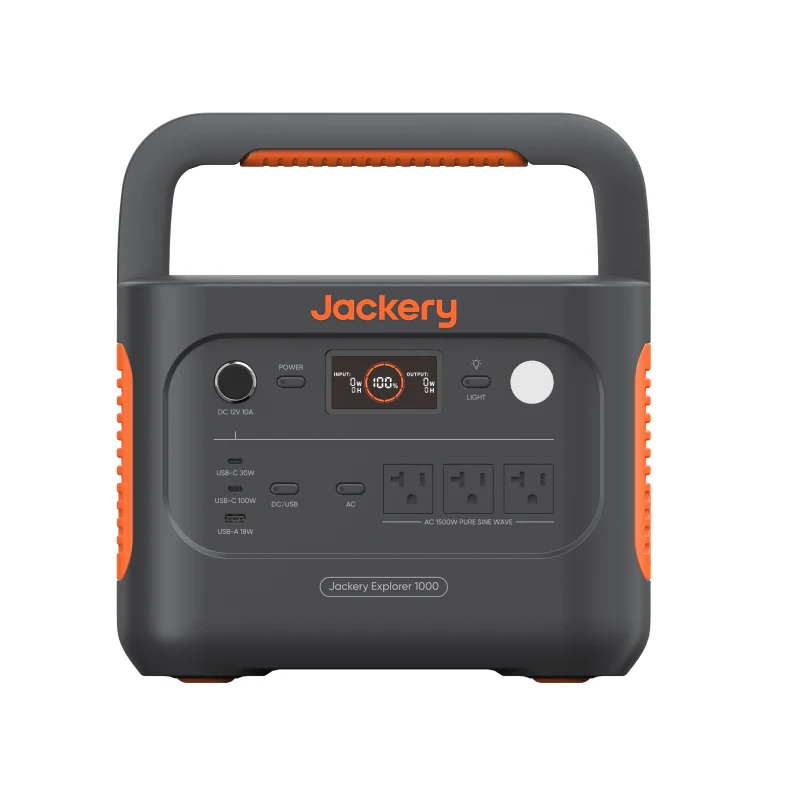
A good camp power setup does not feel exciting when it works. It feels quiet, dull, and almost invisible. That is why the Jackery Explorer 1000 keeps getting attention from American campers, tailgaters, storm-prep buyers, and weekend road-trippers who want power without dragging a gas can into the plan. The appeal is easy to understand: enough battery for phones, lights, a fridge, a coffee maker, or camera gear, but still small enough to carry without turning the trip into a chore. Jackery lists the v2 model with 1,070Wh capacity, LiFePO4 battery chemistry, 1,500W rated AC output, a 3,000W surge peak, and a weight of about 23.8 pounds. For a portable power station, that mix hits the useful middle. It is not a whole-home system. It is not a pocket battery. It is the box you bring when the question is simple: “Can we keep the essentials running?” For broader product and outdoor gear coverage, consumer tech updates can help readers track why certain models suddenly move from niche gear to mainstream carts.
Why Jackery Explorer 1000 Fits the Real Outdoor Power Job
Outdoor power is often sold like a fantasy. Photos show clean tents, perfect sunsets, and laptops glowing beside a lake. Real life is messier. Someone forgot to charge the lantern. A kid wants a tablet during a rain delay. The cooler battery is fading. A campsite neighbor is already running a loud gas unit, and nobody wants to be that person. This is where a mid-size battery unit starts to make sense, not because it can power everything, but because it can cover the annoying gaps that ruin a trip. The best outdoor gear often wins by removing small problems before they become the whole story.
Why the 1,000Wh class feels practical, not excessive
The 1,000Wh range is popular because it sits in the sweet spot between “nice toy” and “too much box.” A smaller unit can handle phones and lights, but it starts to feel thin when you add a portable fridge, a CPAP machine, a drone charger, or a coffee maker. A larger unit gives more breathing room, yet it also costs more, weighs more, and takes up the cargo space you were saving for chairs, food, and sleeping bags.
That trade-off matters in the USA because outdoor use is not one single habit. A family in Arizona might need fan power during a hot desert weekend. A couple in Michigan might want a heated blanket at a fall campsite. A photographer in Utah may care more about charging camera batteries than running kitchen gear. The same battery can serve all three, but only if the buyer understands watt-hours as a budget, not a magic promise.
The non-obvious part is that many buyers do not need a larger station. They need a better plan. If you run every comfort item at once, any portable battery drains fast. If you rotate the load, charge devices during driving breaks, and save AC power for short bursts, the same unit feels much larger than it looks. That is not a spec-sheet trick. It is how people actually stretch power when outlets are gone. The same idea shows up in camp kitchens all the time. A family that boils water once, then switches to low-draw lights and phone charging, gets a better night than the family that treats every outlet like home.
What the port layout says about daily use
Ports are not glamorous, but they decide whether the unit feels helpful at 9 p.m. or annoying. Three AC outlets make it easier to run common household plugs without a power strip. USB-C ports matter because newer laptops, phones, tablets, lights, and camera gear are moving in that direction. The 12V car outlet still earns its place for camping fridges and older travel accessories.
That mix is why a solar generator setup has become more common among people who never thought of themselves as off-grid buyers. They are not trying to live in a remote cabin for two weeks. They want a clean way to keep weekend gear alive and have a backup plan when summer storms knock out neighborhood power.
A useful test is simple. Picture a Friday evening campsite: two phones, one lantern, a small fridge, a Bluetooth speaker, and a laptop used for downloading photos. A weak power station turns that into a debate. A better one makes the power conversation disappear. That silence is part of the value. Nobody remembers the battery when it behaves. They remember the night going smoothly.
The Buying Shift From Gas Backup to Battery Convenience
Battery stations are not replacing fuel generators for every job. That claim would be lazy. A gas generator still wins when you need long run time, high output, and quick refueling during a long outage. But many Americans are not shopping for that level of backup. They want something they can store in a closet, charge before a storm, carry to the patio, and use indoors without fumes. That change in buyer behavior is the real story behind the rise of the modern portable power station. The market is moving because the average power problem has changed. It is often smaller, more personal, and closer to daily life. A decade ago, backup power sounded like a basement project. Now it can mean keeping a router alive for remote work or charging a phone while the utility crew repairs a line.
The quiet advantage matters more than buyers expect
Noise changes how people use power. A fuel generator can keep appliances alive, but it also announces itself to the block. At a campground, noise can turn helpful gear into social friction. At home, it can make a late-night outage feel worse, especially if you are already dealing with heat, food spoilage, or a restless family.
A battery station does not solve every emergency, yet it changes the tone of one. You can place it near the device you need. You can check the screen. You can run a lamp, router, phone charger, or small medical device without walking outside in bad weather. That matters during a thunderstorm at 2 a.m.
Ready.gov still tells households to keep fuel generators outdoors and at least 20 feet away from windows, doors, and attached garages. That guidance is one reason battery units have gained trust. They do not carry the same exhaust issue, though they still need dry placement, safe cords, and common sense around heat and load limits. Safe does not mean careless. It means the danger profile is easier for a normal household to manage.
Why “indoor backup” changes the buying math
The phrase outdoor backup power sounds like camping language, but the home use case is often stronger. Think of a suburban Florida house during a storm watch. The owner is not trying to run central air. They want phones charged, a Wi-Fi router alive, a lamp in the kitchen, and maybe the fridge helped in short cycles. A battery unit can support that smaller, smarter plan.
This is where the math gets personal. A buyer may look at watt-hours and compare prices, but the real question is what failure feels like at home. Losing TV is annoying. Losing phone power during a local alert is different. Losing a CPAP option is different again. The best setup starts with those priorities, not with the biggest number on a product page.
The counterintuitive part is that comfort can be a bad guide. During outages, people often waste stored energy on items that feel normal but do not matter much. A prepared household treats the battery like a small emergency fund. Spend it first on communication, light, refrigeration strategy, and health needs. Entertainment comes after. Once that order is clear, a mid-size station becomes easier to judge.
Where This Unit Makes Sense Around an American Home
The 1000 v2 is easiest to understand when you stop thinking of it as a “camping product.” It is better viewed as a shared power tool for the garage, car, patio, and closet. That broader role explains why shoppers who started with outdoor gear often end up using it at home more than expected. Power needs do not wait for a wilderness trip. They show up during driveway projects, youth sports weekends, backyard parties, brownouts, and bad weather. A good battery earns its shelf space when it helps in all those small moments between big trips.
Weekend trips, tailgates, and small appliance reality
At a college football tailgate in Georgia, a battery station can run speakers, recharge phones, power a small fan, and help with food prep items used in short bursts. In a national park campsite, it can support lights, camera gear, a small fridge, and medical devices without idling a vehicle. In a backyard party, it can place power where the outlet is not.
The trick is knowing which appliances are worth running. A coffee maker may work, but it can pull a lot of power for a short moment. A small induction cooker can be handy, but it demands respect. A mini fridge or cooler may be more practical because it cycles rather than pulling full power nonstop. This is why buyers should check watts before they pack.
Recent deal coverage has pushed the v2 into the spotlight, with Popular Mechanics calling it a strong value pick during a major discount window and noting its balance of capacity, output, and size. Sale price can make a good unit look irresistible, but the use case still has to fit. A discount does not turn a mid-size station into a whole-house backup system. It only makes the right-sized choice feel easier to defend.
Storm prep without the whole-house fantasy
American storm prep has a bad habit of jumping from zero to extreme. One person has no plan beyond a flashlight with old batteries. Another starts pricing a full standby generator before deciding what they need to keep alive. A mid-size battery station sits between those worlds. It offers a practical first layer.
Here is a simple home scenario. A family in North Carolina charges the unit when a storm enters the forecast. They keep it near the kitchen, not buried under camping bins. When the lights go out, they use it for phones, a modem and router if service still works, LED lamps, and short fridge support. They do not plug in a space heater. They do not drain it on a game console. The unit lasts because the plan has rules.
That is the quiet insight many buyers miss: stored power rewards discipline. A larger battery can hide bad habits for longer, but it cannot fix them. A smaller, smarter plan often beats a bigger, vague one. For readers comparing backup layers, home emergency power planning is worth building before choosing any single device. A written list may sound boring. During an outage, boring is beautiful.
How to Decide Before the Sale Price Pulls You In
A popular power station can create urgency. The price drops, the cart timer flashes, and suddenly the decision feels like it has to happen in minutes. That pressure is good for retailers, not always for buyers. The better move is to judge the unit against your actual load list. Not your dream load list. Your real one. A sale should answer a need you already had. It should not invent a new one. Before clicking buy, imagine the first three places you will use it. If those places are clear, the purchase has a spine. If they are fuzzy, the deal may be doing too much of the thinking.
Start with devices, then choose capacity
Write down the items you would use first during a weekend trip or outage. Phone. Lamp. Router. Laptop. Cooler. CPAP. Camera batteries. Then check the watt draw for each. The goal is not perfect lab math. The goal is to catch the obvious mismatch before you buy.
If your list is mostly electronics and small comforts, a battery power station in this class makes sense. If your list includes a microwave, heater, air conditioner, sump pump, and full-size refrigerator all at once, you are asking for a different tier. That does not make the v2 weak. It means you are shopping in the wrong category.
This is also why buyers should not judge capacity by one dramatic appliance claim. A coffee maker run time is useful, but most people do not buy a station to make coffee for an hour straight. Mixed use matters more. Short bursts from high-draw gear plus long sessions from low-draw devices create a more honest picture. The best pre-buy test is humble: what will you plug in on day one?
Solar sounds simple, but planning still matters
Adding panels can stretch a trip, but solar is not a cheat code. Shade, clouds, angle, season, and panel size all matter. A sunny campsite in Nevada is not the same as a wooded site in Pennsylvania. Even good panels need patience and placement.
That said, solar charging changes the mood of a trip. You stop treating the battery like a sealed tank and start treating it like a small system. Morning sun can recover part of last night’s use. Midday charging can cover camera batteries or phones. You still need to manage expectations, but the setup feels less fragile.
A solar generator is most useful when you match it to habits. If you travel in open areas, stay put for hours, and can aim panels without babysitting them all day, solar makes sense. If your trips are shaded, short, or rushed, wall charging before departure may matter more. For product comparisons across capacity sizes, portable camping power options can help separate good marketing from daily fit. The right answer is not always more equipment. Sometimes it is better timing, fewer loads, and a calmer plan.
Conclusion
The reason this model keeps winning attention is not mystery. It lands in the part of the market where real buyers live: enough power to matter, light enough to carry, and simple enough that nobody needs an instruction speech before using it. That is why the Jackery Explorer 1000 feels less like a luxury accessory and more like a practical answer to modern outdoor and home backup problems.
Still, the smartest buyers will treat it as a tool, not a miracle box. It can support trips, tailgates, work setups, and outage plans, but it performs best when you decide what matters before plugging things in. The same rule applies to any outdoor backup power setup. Power is most useful when it has a job.
Buy it because it fits your routine, your storm plan, and your gear list. Not because the internet got loud. A good power station should make life calmer when the outlet disappears, and that is the standard worth keeping.
Frequently Asked Questions
How long can a 1,000Wh power station run small devices?
Small devices can run for many hours, depending on their watt draw. Phones, LED lights, tablets, and camera batteries use modest energy. Appliances with heat, motors, or compressors drain power faster. Always check the device wattage before estimating runtime.
Is a portable power station better than a gas generator for camping?
For most campgrounds, battery power is easier to live with because it is quiet, fume-free, and simple to place near your gear. A gas generator still makes sense for longer, heavier power needs where refueling matters more than silence.
Can this type of battery unit run a refrigerator during an outage?
It can help with many refrigerators, but runtime depends on the fridge size, age, temperature, and cycling pattern. Use it in planned intervals, keep the door closed, and save battery for other essentials such as phones, lights, and medical gear.
What should I plug in first during a power outage?
Start with communication, lighting, medical needs, and food protection. Phones, a router, LED lamps, and short refrigerator support usually matter more than comfort extras. Treat stored power like an emergency budget and spend it carefully.
Is solar charging worth adding for weekend trips?
Solar makes sense when you camp in open sun and stay in one place long enough to charge. It is less helpful under tree cover or during short stops. Panels are best viewed as a range extender, not a guaranteed full refill.
Can I use a battery power station indoors?
Battery stations can be used indoors when operated according to the manual, kept dry, and not overloaded. They do not create exhaust like gas generators. Still, leave room for heat to escape and avoid unsafe cords or wet surfaces.
What size power station is best for tailgating?
A mid-size unit works well for phones, speakers, lights, fans, and small food-prep gear used in short bursts. Large cooking appliances may need more output and capacity. Check each device’s watt rating before game day.
Should I buy during a sale or wait for newer models?
A sale is worth considering when the unit already matches your needs. Waiting makes sense if you need expandable capacity, whole-home backup, or higher output. The best deal is the one that fits your real gear list.