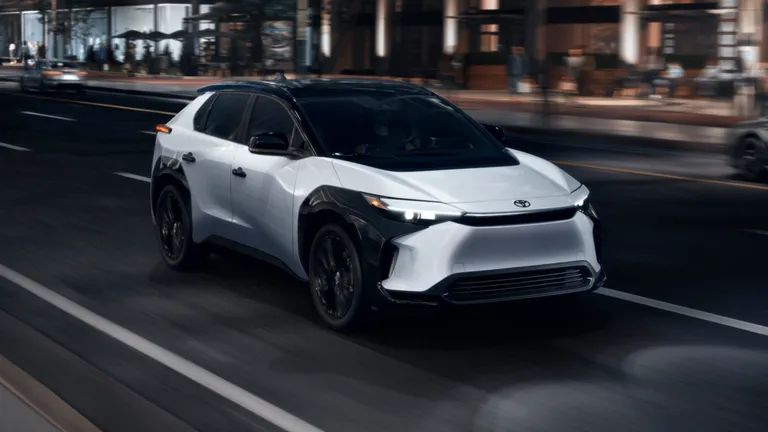
A cheaper EV does not always make people trust it. That is the strange part of this story. Toyota bZ4X shoppers are seeing the kind of pricing move that usually belongs to younger brands trying to get noticed, not a company known for slow, careful bets. For U.S. buyers comparing monthly payments, charging access, range, and resale comfort, the headline is simple: Toyota has pushed its electric crossover into a tougher value lane while the Model Y still owns much of the public conversation. The 2026 version is now sold as the shorter-named bZ, and Toyota lists a starting MSRP of $34,900 before its dealer processing and handling fee, with the longest-range version rated up to 314 miles by Toyota’s own model page. For readers following new vehicle market shifts, this is not only an electric SUV price cut story. It is Toyota trying to make a cautious EV feel like a normal family purchase.
Why the Toyota bZ4X Price Cut Changes the Conversation
Toyota’s earlier EV problem was not that Americans hated the car. The bigger issue was that too many buyers could not explain why they should pick it. Tesla had the charging network. Hyundai and Kia had sharper design energy. Ford had truck and Mustang buzz. Toyota had trust, but trust alone does not close a sale when the window sticker feels high. The price move gives Toyota a cleaner answer. It tells a shopper in Ohio, Arizona, or North Carolina that the brand is no longer asking for a leap of faith at a premium. Toyota’s U.S. newsroom said the 2025 model already received a lower starting MSRP, with a reduction of up to $6,000 and an XLE FWD price of $37,070. Then the 2026 bZ arrived with a lower listed base MSRP of $34,900 before destination, plus fresh battery and charging changes. That sequence matters because shoppers read repeated price action as a signal. The move also changes dealer behavior. A salesperson no longer has to defend the car from a weak starting point. They can begin with the payment, then explain range, warranty comfort, charger access, and trim differences.
The old price made the SUV easy to skip
Before the cut, the car sat in an awkward place. It was not strange enough to feel exciting, and it was not cheap enough to feel safe. A buyer walking into a Toyota dealer after owning a RAV4 Hybrid might have liked the badge, the cabin calm, and the dealer nearby. Then they would compare range, charging, and payment against rivals and pause.
That pause kills EV sales. Gas vehicles can survive a small doubt because buyers understand them. Electric buyers still carry extra questions: Where do I charge on a road trip? How much range disappears in winter? Will the software annoy me? When the price is high, every question feels heavier.
A lower payment softens those doubts. It does not erase them. It gives the salesperson and the shopper room to talk through them without the whole deal feeling stretched. That is where this electric SUV price cut earns its weight.
Toyota is selling comfort, not hype
The counterintuitive part is that Toyota does not need to beat Tesla at being Tesla. It would be a mistake to try. A Toyota buyer often wants fewer surprises, nearby service, a calmer cabin, and a purchase path that feels familiar. That buyer may not care about the fastest screen or the wildest acceleration run.
This is where the Toyota electric SUV can become more persuasive. It can feel less like a gadget and more like a quiet appliance with good seats, decent range, and a badge your family already trusts. That sounds boring until you remember how many Americans buy cars to remove stress, not add drama.
The better price lets Toyota lean into that identity. It can say, in effect, here is the EV for the person who does not want their whole life to become an EV project. That is a sharper pitch than it sounds, because the next wave of EV buyers will not all be early adopters. Many will be ordinary families replacing a worn-out crossover.
What an Electric SUV Price Cut Means Against Tesla
Tesla still sets the rhythm in the U.S. EV market. Even people who do not want a Tesla use it as the reference point. That is why the bZ’s new pricing lands with force. Tesla lists the Model Y from $41,630, with destination and order fees included but taxes and other fees excluded. Car and Driver reported the 2026 Toyota bZ base trim at $36,350 when destination is included, which makes the payment gap hard to ignore for shoppers who care more about monthly cost than badge drama. Still, a lower number does not win by itself. Tesla’s strength is not only the car. It is the charging habit, the app habit, the screen-first ownership habit, and the feeling that the brand built the EV lane. Toyota has to fight with a different kind of value. That means the comparison should be honest. Tesla may still feel quicker, cleaner, and more tech-forward to some drivers. Toyota may feel calmer, more familiar, and easier to service for others. The price cut does not make one side vanish. It makes the choice less automatic.
The Model Y comparison is about daily confidence
A Tesla Model Y competitor has to answer one question before all others: will the owner feel less limited than they expect? That is where charging access becomes more than a spec. It becomes the difference between “we can take this to the beach” and “let’s use the gas car.”
Toyota knows this. For the 2026 bZ, the company added a North American Charging System port and said drivers can access more than 25,000 additional NACS plugs through the Tesla Supercharger Network in North America. That is a major psychological shift for Toyota shoppers. They no longer have to imagine the Toyota EV as living outside the best-known charging map.
The non-obvious insight is that shared charging access may help Toyota more than it helps Tesla. Tesla already had the network advantage. Toyota gains permission to be considered.
Cheaper does not mean weaker if the package is honest
Many buyers hear “price cut” and wonder what got removed. That is fair. Car pricing can feel like a shell game, especially when trims, fees, and incentives muddy the real number. Toyota has to make the value feel plain.
The 2026 changes help. Toyota said the bZ gets up to 338 combined system horsepower on AWD models, a 14-inch Toyota Audio Multimedia touchscreen, revised cabin pieces, and battery choices that support up to 314 miles of estimated range in the XLE FWD Plus model. Those updates let the lower price feel like a reset, not a clearance tag. They also give dealers more to explain than a discount. A lower sticker opens the door, but range, charging, interior upgrades, and AWD punch keep the conversation alive after the first number is forgotten.
A buyer in Denver may still pick the Model Y for acceleration and software. A buyer in suburban Chicago may pick the Toyota for a softer buying experience and a dealer fifteen minutes away. Both choices can be rational. That is the point. Toyota does not need to win every comparison. It needs to win the buyers who were almost ready but wanted a safer entry price.
Range, Charging, and the Real Cost of Living With It
A window sticker gets attention, but ownership costs decide whether the purchase feels smart after six months. That is where Toyota has to be careful. A lower price brings more people into the store, including drivers who have never planned around charging. If their first EV experience feels confusing, the discount will not matter for long. The best version of this car is not bought by someone chasing a perfect spec sheet. It is bought by someone who studies their week. Commute distance. Garage access. Weather. School drop-off. Weekend drives. That person can turn the deal into a good fit instead of a gamble. There is another cost people forget: time. A gas stop is annoying, but it is familiar. A charging stop asks you to plan, park, wait, and sometimes switch chargers. If the bZ saves you money but steals too much schedule freedom, you will not call it a win.
Range only matters when it matches your routine
The Toyota electric SUV now gives shoppers more breathing room than before. Toyota’s official range listings show 236 miles for the base XLE on its model page and point to an EPA-estimated 314-mile rating on the XLE FWD Plus. That spread matters because the cheapest version and the longest-range version are not the same purchase.
A driver in Phoenix with a 28-mile round-trip commute may not need the biggest battery. A driver in rural Pennsylvania who sees cold mornings and longer highway runs should think harder. Range is not a bragging number. It is a comfort budget.
That is where many buyers make the wrong call. They shop the lowest advertised price, then expect the longest-range life. The smarter move is to price the trim that fits your week, not the trim that makes the headline look best.
Home charging is the quiet deal maker
Public charging gets the press. Home charging gets the loyalty. The U.S. Department of Energy says Level 2 charging can be used at home or public stations and is far faster than a common 120-volt outlet, while DC fast charging is mainly a public-station tool for quicker stops. The DOE’s guide to charging electric vehicles is worth reading before signing paperwork.
For many families, the right math is simple. If you can charge overnight at home, the Toyota becomes easier to live with. If you rely only on public stations, you need to map your errands, grocery stops, and weekend routes before you buy.
The quiet truth is that a garage can be worth more than twenty extra miles of range. A home plug changes how you feel about the car every morning. Full enough. Ready enough. No special trip needed. Toyota’s 11-kW onboard AC charger for the 2026 bZ also matters here, because Level 2 home charging is where most daily convenience is won. The payment may pull you in, but the charging setup decides whether you stay happy.
Who Should Buy It, Wait, or Walk Away
The new pricing makes the bZ more interesting, but it does not make it the right answer for everyone. That is the honest take. A deal is only a deal when it fits your life, your driveway, and your tolerance for change. This is where Toyota has an edge. Its buyers often move with care. They compare. They ask service questions. They want to know what happens after the sale. If Toyota can support those buyers with clear dealer training and sane lease offers, the lower price could turn curiosity into volume. The hidden risk is overconfidence. A shopper may see the discount and skip the harder checks. That would be a mistake. EV ownership is simple when the setup is right and irritating when it is not. The car is only half the purchase.
The best buyer is practical and a little skeptical
The ideal buyer wants an affordable electric SUV without turning car ownership into a hobby. Maybe you own a Camry, RAV4, or Highlander now. Maybe you like the idea of fewer gas stops, but you do not want a cabin that feels like a software beta. You want buttons where they make sense, service nearby, and a brand your household already knows.
That person should look closely. The bZ is not trying to be the flashiest EV in the parking lot. It is trying to become the normal one. For a lot of buyers, normal is the missing EV feature.
A good shopping path would look like this: test-drive the Toyota and Model Y on the same weekend, price insurance before choosing, check charger installation cost, and compare the exact trim you would buy. Do not compare Toyota’s cheapest trim with Tesla’s nicer one unless that reflects your real budget. For deeper prep, use an electric SUV buying guide before you visit a dealer and a home charging cost checklist before you schedule an electrician.
Some shoppers should still wait
A Tesla Model Y competitor has to live in a fast-changing market. Prices move. Lease programs change. Local rebates come and go. New trims appear. If you cannot charge at home and your town has weak public charging, waiting may be wiser than chasing the discount.
You should also wait if you need maximum road-trip ease every month. Toyota’s NACS access helps, but the whole experience still depends on station location, adapter rules for older models, charger uptime, and route planning. Toyota said 2023-25 bZ4X drivers would receive information about complimentary NACS adapters through dealers, while 2026 BEVs add broader NACS support and Plug & Charge plans. That is progress, but buyers still need to check details for their exact model year.
The price cut changes the conversation. It does not end the homework. If the numbers look good, slow down anyway. The best EV purchase is the one that still makes sense after you price the charger, call your insurer, and drive your normal route. A bargain that fails your routine is not a bargain. It is a monthly reminder that the test drive was too short.
Conclusion
Toyota’s move works because it attacks the one barrier that made its EV easy to dismiss: value. The company did not need a louder personality or a stranger design. It needed a cleaner reason for practical Americans to take the test drive. The Toyota bZ4X now sits in a stronger position because the lower price meets better range, broader charging access, and the comfort of a familiar dealer network. That mix will not pull every Tesla shopper away, and it does not have to. The bigger win is making electric ownership feel less like a risk for buyers who already trust Toyota. If you are shopping this segment, do the boring math first: exact trim price, home charger cost, insurance, commute range, and local public charging. Then drive both rivals on the same roads. The right EV should feel easy before the sales pitch starts, and the smartest buyer will treat the discount as an invitation, not permission to skip the hard questions. Your best protection is not brand loyalty. It is knowing where you charge, what you pay, and how the car behaves on the roads you drive every week.
Frequently Asked Questions
How much cheaper is Toyota’s electric SUV now?
Toyota lists the 2026 bZ from $34,900 before its dealer processing and handling fee, while third-party pricing reports place the destination-included base figure at $36,350. The 2025 version had already seen a lower MSRP, so the newer model strengthens the value angle.
Is the Toyota bZ a good alternative to the Tesla Model Y?
Yes, for buyers who value a lower entry price, Toyota dealer access, a calmer ownership path, and practical daily range. The Model Y still has strong software, performance, and brand pull, so the better choice depends on driving habits and comfort with each buying experience.
What changed from bZ4X to bZ for 2026?
Toyota shortened the name and updated the vehicle with more range on certain trims, more power on AWD models, NACS charging support, a larger screen, cabin revisions, and improved charging hardware. It feels more like a reset than a name change alone.
Does the Toyota bZ use Tesla Superchargers?
The 2026 model adds NACS support, and Toyota says drivers can access more than 25,000 additional NACS plugs in North America through the Tesla Supercharger Network. Older 2023-25 models need adapter details handled through Toyota dealers.
Which Toyota bZ trim makes the most sense?
The XLE FWD Plus is the sweet spot for many shoppers because it pairs a better range estimate with a lower price than upper trims. Buyers who face snow, steep roads, or dirt access roads may prefer AWD, even with added cost.
Should I lease or buy this electric SUV?
Leasing can make sense if you expect EV prices, battery tech, or incentives to keep changing. Buying can work if you plan to keep the car long term, can charge at home, and get a purchase price that leaves room for future depreciation.
How should I compare it with a Tesla before buying?
Drive both on the same day if possible. Compare out-the-door price, insurance, charging access, cabin controls, ride comfort, warranty terms, and the real trim you would own. Avoid comparing a base Toyota against a higher-trim Tesla unless that matches your budget.
Is now a smart time to buy Toyota’s EV?
It can be, especially if local inventory, dealer discounts, and home charging line up. Wait if you lack reliable charging, need frequent long-distance travel, or expect better lease support soon. The price is better, but your daily setup still matters most.