
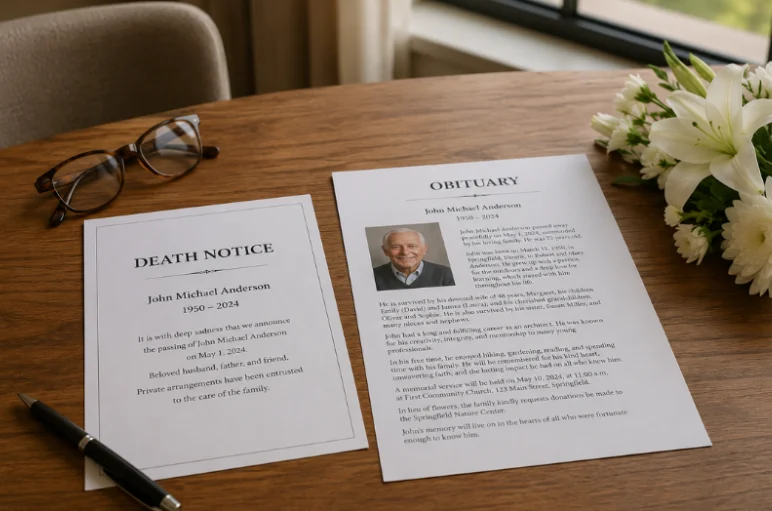
A published death notice can provide much more information than the simple announcement that someone has passed away. For family members, friends, and researchers, these notices can reveal funeral arrangements, family relationships, personal history, and details about a person’s connection to their community. When you’re searching through regional newspapers or obituary databases, even a short notice can provide useful clues for understanding a person’s life and finding additional records.
People ask what you actually learn from reading one. Short answer: quite a bit. A published notice hands you three big things right off the bat, service logistics, personal history, and family maps. You get real dates, cemetery locations, maiden names, military records, and exact donation links. If you are searching regional databases, it is the fastest way to grab verified facts straight from the source.
Key Takeaways
- Service details come first. Get exact times for viewings, chapel services, and local cemetery burials across regional records like Oklahoma city obituaries.
- Map complex family lineages without guessing. Notices spell out surviving spouses, kids, grandkids, and relatives who passed away earlier.
- Uncover actual human details like military service records, lifetime careers, high school or college roots, and preferred charities.
- Genealogists use print archives to verify birth dates, maiden names, old home addresses, and missing links in family lines.
7 Things You Can Learn From a Death Notice
Size changes everything here. A print snippet in a city paper costs a small fortune per line, so families trim it down to the absolute bare bones. Online memorial pages? Total opposite. People write thousands of words, post photo galleries, share favorite recipes, and leave long personal stories that stretch on for miles.
1. Service Times and Exact Locations
Why post right away? Simple. You have to let the community know where to go before the doors open. Without clear public notices, families end up repeating the exact same directions dozens of times over the phone during an already exhausting week.
Scan the text and you will spot:
- Dates and Times: Start times for visitations, rosaries, church services, and graveside committals.
- Venues: Street addresses for local churches, chapels, community halls, and cemeteries.
- Officiants: The funeral home handling the body and the pastor or speaker running the service.
- Access: Notes indicating whether the funeral is open to everyone or kept strictly private.
Putting this in print saves grieving parents and spouses from answering fifty text messages an hour while trying to plan a burial.
2. Legal Names, Titles, and Maiden Names
Tracking someone named John Smith through century-old property records is a total nightmare. A good notice acts like a bright spotlight that burns right through that confusion.
- Full Names: First, middle, and last names, plus nicknames people actually called them around town.
- Maiden Names: The single most important clue for tracking female family lines after marriage.
- Ranks and Suffixes: Tags like Jr., III, Dr. or military titles that keep relatives separated in official records.
3. Life Milestones and Work History
Brief notices stick to basic dates but longer write-ups tell you how somebody actually spent their seventy or eighty years on earth. They outline life transitions, career shifts, and personal passions that defined who they were to the people around them.
- Birth and Death Details: Exact dates, hospital locations or hometowns.
- Jobs: Longtime employers, trade unions, retired positions, and passion projects.
- Military Background: Service branches, active wars, units, and medals earned.
- Schooling: High schools, colleges, local volunteer clubs or church groups.
4. Family Lines and Surviving Relatives
Who is still here? Who died ten years ago? Finding those answers forms the bedrock of every solid family tree project.
- Immediate Relatives: Surviving wives, husbands, kids, parents, and siblings.
- Generations Down: Grandchildren, great-grandkids, nieces, and in-laws.
- Predeceased Loved Ones: Lists of relatives who died first which helps you build older branches correctly without getting lost.
5. Donation Requests and Flower Preferences
Nobody wants five hundred lilies delivered to a tiny living room. Notices tell well-wishers how to direct their sympathy without causing extra hassle for a grieving household.
- Flower Notes: Phrases like “in lieu of flowers” mean save your money.
- Charities: Direct requests to give money to cancer centers, hospices or animal rescues.
- Family Funds: Links to support accounts set up for young kids or college trusts left behind.
6. Hobbies, Character, and Odd Habits
Job titles miss the fun stuff entirely. A warm write-up records what made a person tick and what brought them joy on quiet weekends.
- Passions: Fishing trips, baking bread, gardening or screaming at football games on Sunday afternoons.
- Local Work: Coaching Little League, singing in choirs or fixing up neighborhood parks.
- Stories: Quirky catchphrases, jokes or tiny family stories that bring a smile to old friends.
7. Hometown Roots and Local Impact
Anchoring a person to a neighborhood adds rich context to plain government files. It shows how they fit into the broader story of a town or city over several decades.
- Places Lived: Towns, farms or city blocks where they built a life over the decades.
- Community Footprint: What they built, started or ran in the local area.
How to Read These Records Like a Pro
Reading old newsprint microfilms or searching digital archives takes real patience. You have to know where to look and what to watch out for along the way.
Watch out for simple typos. Typesetters rushed under crazy deadlines fifty years ago, and modern optical scanners glitch all the time on faded ink. If a name search stalls out completely, search by last name and county instead of typing a full first name.
Also, make sure you search nearby towns. Small-town families often ran a short, cheap note in their local weekly paper and a bigger, detailed piece in the nearest big-city daily. Compare both publications, as they almost never match word for word and often list different relatives.
Conclusion
A published death notice is way more than a sad note in the morning paper. It is a working tool that coordinates services, captures personal histories, and preserves family ties for generations to come. Whether you are checking Oklahoma city obituaries to find chapel times today or digging through old library microfilms to trace your great-grandparents, these write-ups give you a clear, honest window into a life worth remembering.
Read More: Free Ways to Publish an Obituary in Oklahoma
